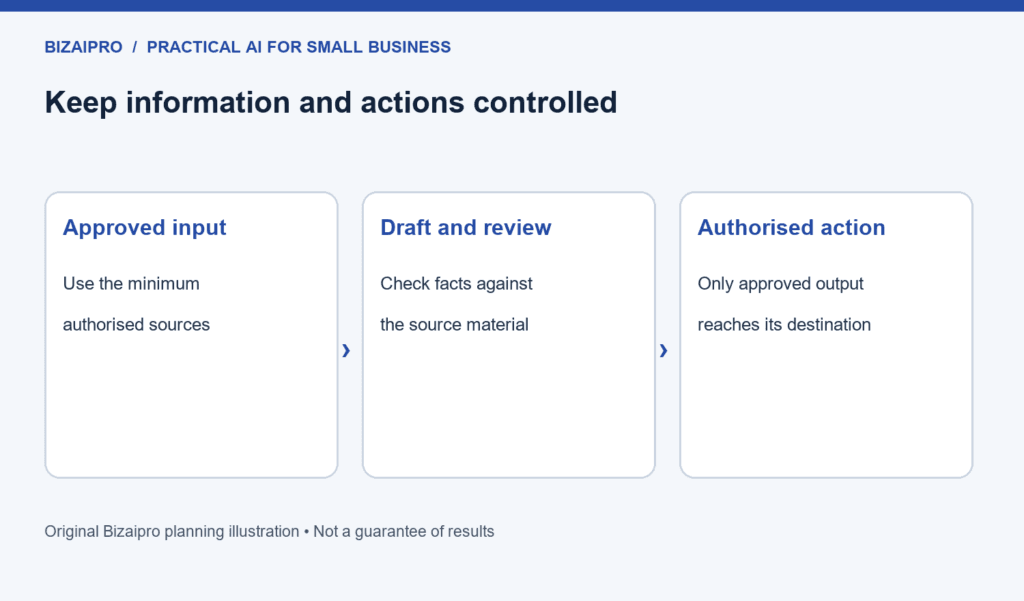

A content brief makes the work easier to judge. It explains who the reader is, what they need and which facts a draft can use. AI can help organise that brief, but the source material and editorial decision remain essential.
1. Define the reader’s question
Choose one main question. “What should a local business check before choosing appointment software?” is more useful than “Write about business technology.” Describe the reader’s situation and the action they should be able to take after reading.
Keep the purpose realistic. An article can explain a decision; it cannot guarantee that the reader will achieve a particular business result.
2. Assemble approved source material
Collect the product notes, policies, examples and official references the draft may rely on. Record where each fact came from and when it was checked. If the material contains private customer information, remove it or use a fictional example.
Mark unresolved details explicitly. Missing price information should remain a question for verification rather than become an invented number.
3. Set the boundaries
Tell the tool what not to invent: statistics, customer quotations, testimonials, qualifications, prices or product capabilities. Specify the tone, length and output structure. Ask it to separate facts from proposed language.
4. Review the outline before drafting
Check whether each section contributes to the main question. Remove generic background that delays the useful information. Put the decision criteria or practical steps near the beginning.
Look for sections that lack evidence. If the outline proposes “proven results,” ask what proof would support that phrase. If there is none, change the section rather than letting the draft imply evidence exists.
5. Draft and check in manageable sections
For a claim-heavy article, drafting one section at a time can make verification easier. Check names, numbers, dates, links and product details against the source. Do not treat a plausible citation as valid until you have opened it and confirmed what it supports.
6. Run a publication check
- Does the article answer the reader’s question?
- Can every material factual claim be traced to evidence?
- Are examples clearly distinguished from real results?
- Are commercial relationships disclosed where relevant?
- Do headings, link labels and image descriptions make sense?
- Has a responsible person approved customer-facing claims?
Save the brief with the published piece so later updates have context. Record substantive changes instead of simply replacing the date to make the article appear new.
Use the prompt library for an adaptable starting prompt. Our editorial policy and review methodology describe the standards behind Bizaipro’s content.